
Soundproofing Drywall Solutions in Wilmington, NC
Wilmington Elite Drywall installs professional wilmington-drywall-soundproofing-insulation drywall systems in Wilmington, NC using proven noise-reduction techniques refined over years of residential and commercial work. We combine specialized drywall products, resilient channel framing, and sound-dampening compounds to deliver measurable reductions in noise transmission between rooms, floors, and shared walls.
Whether you are building a home theater, quieting a bedroom that shares a wall with a noisy street, or meeting acoustic requirements in a multi-family building, we design and install systems that make a real difference you can hear immediately.
Get a Free EstimateSoundproofing Drywall Technology That Reduces Noise
Standard drywall does very little to block sound. A typical interior wall with a single layer of half-inch drywall on each side achieves an STC rating of around 33, which means normal conversation passes through clearly. Effective wilmington-drywall-soundproofing-insulation requires a system-based approach that addresses how sound travels through structures: through the air, through direct contact with framing, and through gaps and penetrations.
We build assemblies that target all three pathways. By adding mass, breaking the direct connection between drywall and studs, and sealing every gap, we routinely achieve STC ratings of 50 to 60 or higher. That is the difference between hearing every word through a wall and hearing almost nothing.
Double-Layer Drywall Systems
Adding a second layer of drywall significantly increases the mass of a wall, which is one of the most effective ways to block airborne sound. We install two layers of five-eighths-inch drywall with staggered seams so joints never align between layers. This eliminates weak points where sound could pass through and creates a dense, heavy barrier that absorbs and reflects noise energy.
Resilient Channel Installation
Sound travels through solid connections. When drywall is screwed directly to studs, vibrations transfer through the framing to the other side. Resilient channels are thin metal strips mounted to studs that create a small gap, decoupling the drywall from the structure. This break in the path reduces sound transmission dramatically, especially for bass frequencies and impact noise like footsteps.
Sound-Dampening Compound
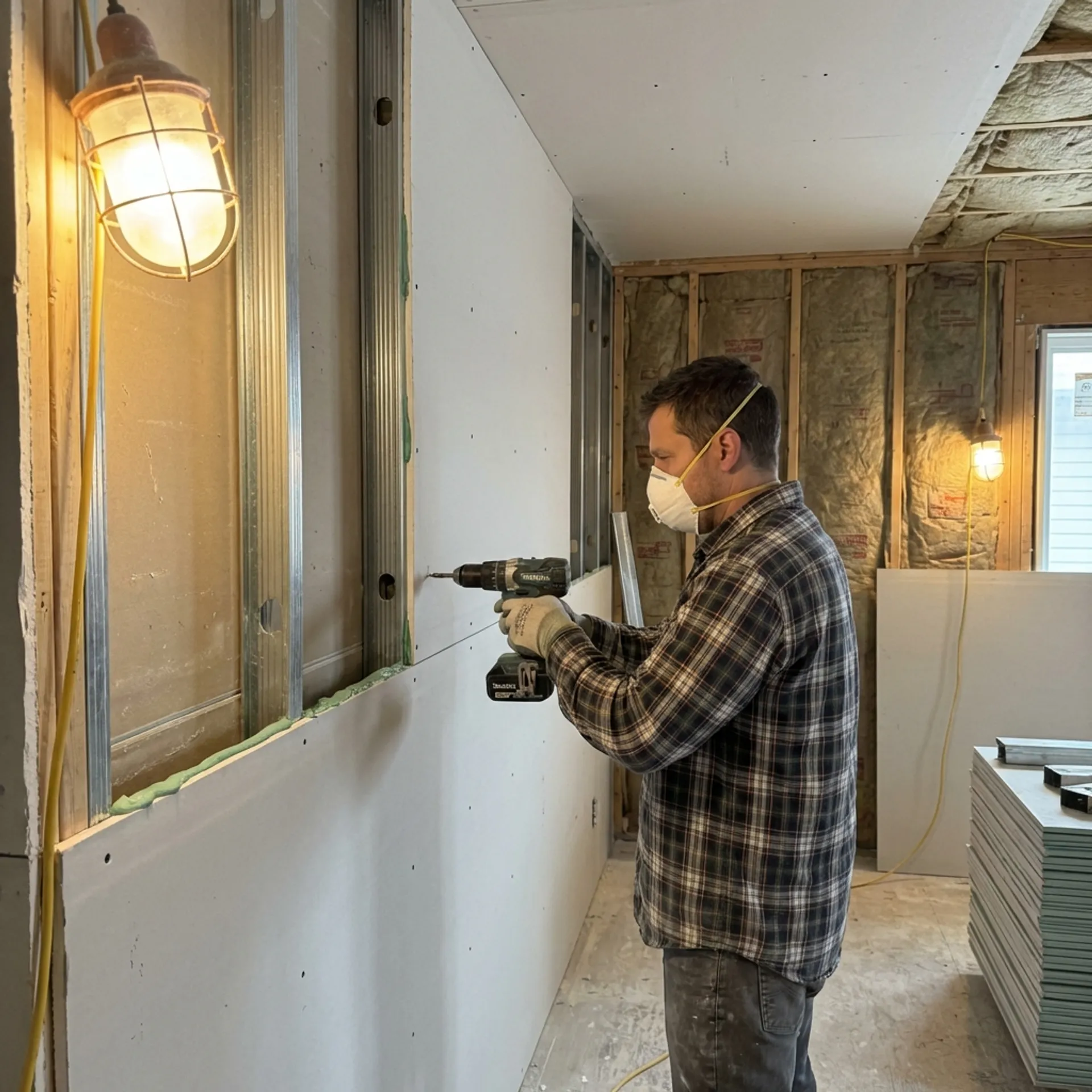
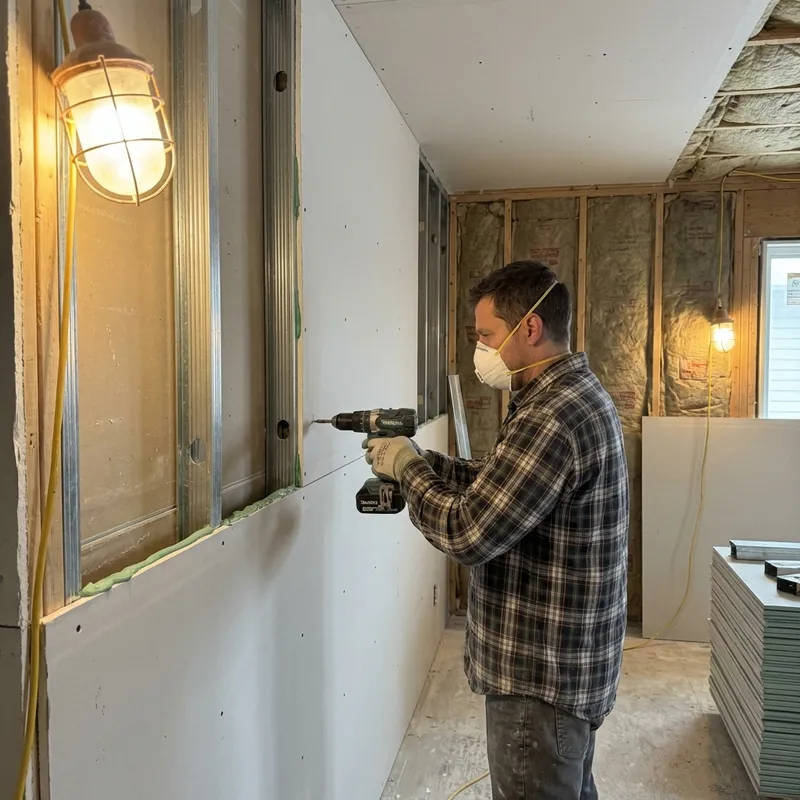
Between the two layers of drywall, we apply a viscoelastic sound-dampening compound such as Green Glue. This compound converts sound energy into small amounts of heat as it passes between panels. It is most effective at the mid-range frequencies where human speech falls, making it particularly valuable for bedrooms, offices, and conference rooms where conversation privacy matters.
STC-Rated Assemblies Installed Correctly
A wilmington-drywall-soundproofing-insulation system is only as good as its weakest point. One missed gap around an outlet box or an improperly installed resilient channel can undermine the entire assembly. We understand that achieving target STC ratings requires precision at every step. Our crews seal electrical penetrations with acoustical putty pads, caulk the perimeter of every panel with non-hardening acoustical sealant, and verify that no screws short-circuit the resilient channels by contacting the studs behind them.
We work with homeowners, builders, and architects to select the right combination of materials for each application and budget. From basic improvements that noticeably reduce noise to high-performance assemblies for dedicated home theaters and recording spaces, every system we install is built to perform as rated.
Soundproofing Installation Process
1. Noise Assessment and Planning
We evaluate the existing wall or ceiling construction, identify the primary noise sources, and determine the target STC rating for your space. We recommend the most cost-effective assembly to reach your goal, whether that is a bedroom needing moderate improvement or a home theater requiring maximum isolation.
2. Framing Modification and Resilient Channels
If the project allows framing access, we install resilient channels horizontally across the studs at the correct spacing. We add batt insulation between studs to absorb sound energy within the cavity. For retrofit projects where studs are not exposed, we mount channels directly over the existing drywall surface to create the decoupling layer.
3. Soundproof Drywall Installation
We hang the first layer of drywall onto the resilient channels, apply sound-dampening compound across the full surface, then install the second layer with staggered seams. Every screw is placed precisely to avoid penetrating through channels into studs, which would create a sound bridge and defeat the purpose of the decoupling system.
4. Sealing and Performance Testing
We seal all perimeter joints, electrical boxes, HVAC penetrations, and plumbing passes with acoustical sealant and putty pads. Every gap is addressed because even small openings allow sound to flank the assembly. We verify the completed installation performs as designed before finishing and taping the surface for a clean, paint-ready result.