
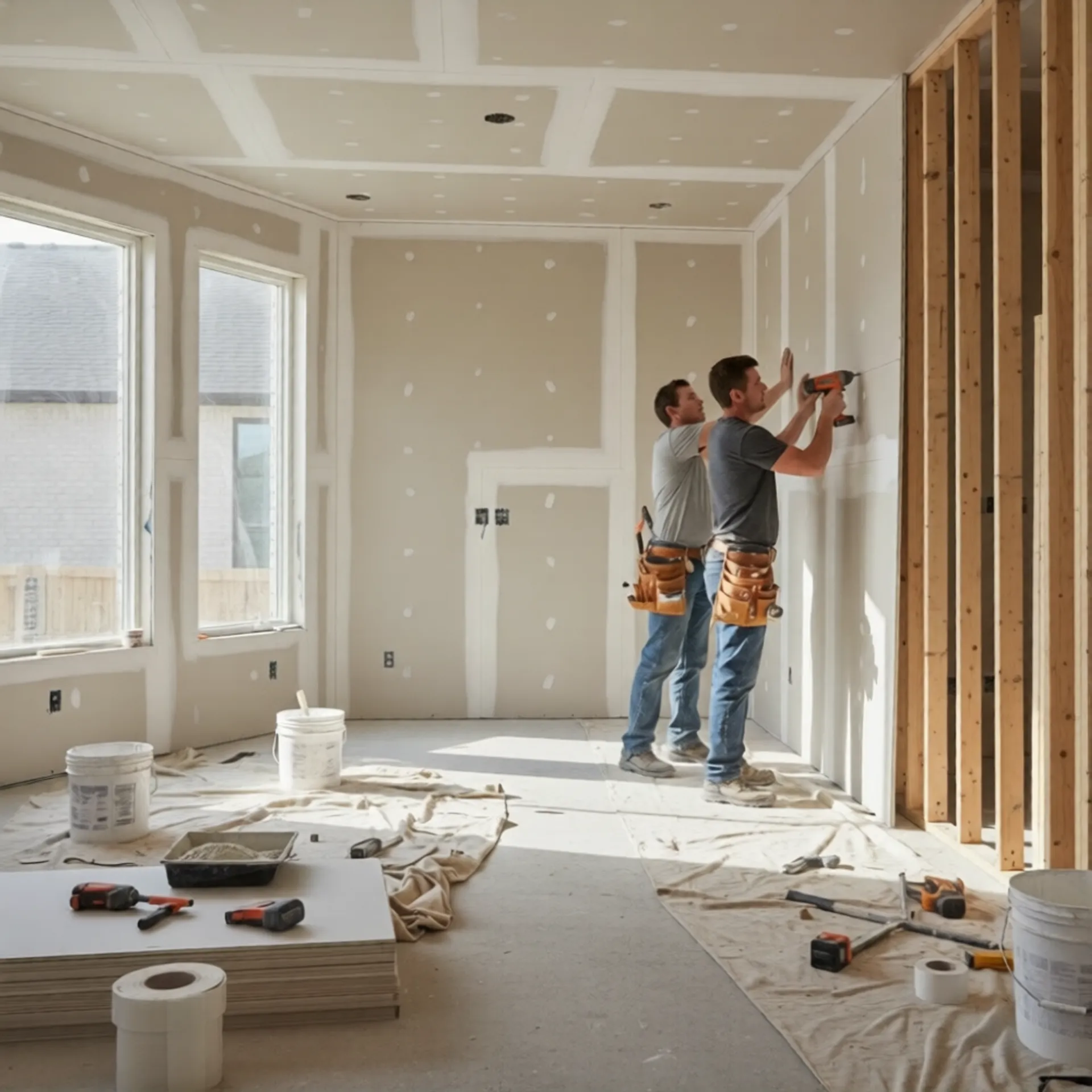
Fire-Rated Drywall Installation in Wilmington, NC
Wilmington Elite Drywall provides code-compliant fire-rated drywall installation in Wilmington, NC with the technical knowledge to specify and install the correct fire-rated assemblies for your project. We work with Type X, Type C, and multi-layer fire-rated systems that meet 1-hour and 2-hour fire resistance ratings required by the North Carolina Building Code.
Fire-rated drywall is not optional where code demands it. Garages adjacent to living spaces, furnace rooms, stairwell enclosures, and walls between dwelling units all require specific fire resistance ratings. We make sure your installation meets every requirement and passes inspection the first time.
Get a Free EstimateFire-Rated Assemblies for Safety and Code Compliance
Fire-rated drywall slows the spread of fire between rooms and structures, giving occupants critical time to evacuate and firefighters time to respond. Standard half-inch drywall offers roughly 30 minutes of fire resistance. A properly installed Type X assembly delivers a full 1-hour rating, while Type C panels and multi-layer configurations can achieve 2-hour or higher ratings. The difference between these products is not just panel thickness. It comes down to the gypsum core formulation, the fastening schedule, the joint treatment, and how penetrations are sealed. Every detail matters because an improperly detailed fire-rated wall can fail an inspection or, worse, fail in an actual fire.
Type X Drywall Installation
Type X is the most commonly specified fire-rated drywall. Available in 5/8-inch thickness, it contains glass fibers in the gypsum core that hold the panel together longer under heat. A single layer of Type X on each side of a standard wood or steel stud wall provides a 1-hour fire resistance rating. We install Type X in attached garages, utility rooms, furnace enclosures, and anywhere code requires a minimum 1-hour rating.
Type C Drywall Installation
Type C drywall uses an enhanced core with additional glass fibers and a vermiculite additive that expands when heated, actively filling shrinkage cracks in the gypsum. This makes Type C panels more dimensionally stable under fire conditions. A single layer of Type C can achieve higher fire ratings than Type X in the same assembly configuration. We specify Type C when projects demand maximum protection with minimal wall thickness.
Fire-Rated Wall Assemblies
A fire rating belongs to the entire wall assembly, not just the panel. We build complete fire-rated assemblies that include the correct stud type and spacing, the specified number of drywall layers, approved fastener patterns, and fire-rated joint treatment. For 2-hour ratings, we install double layers of fire-rated drywall with staggered seams, using the exact screw spacing and penetration detailing required by the tested assembly.
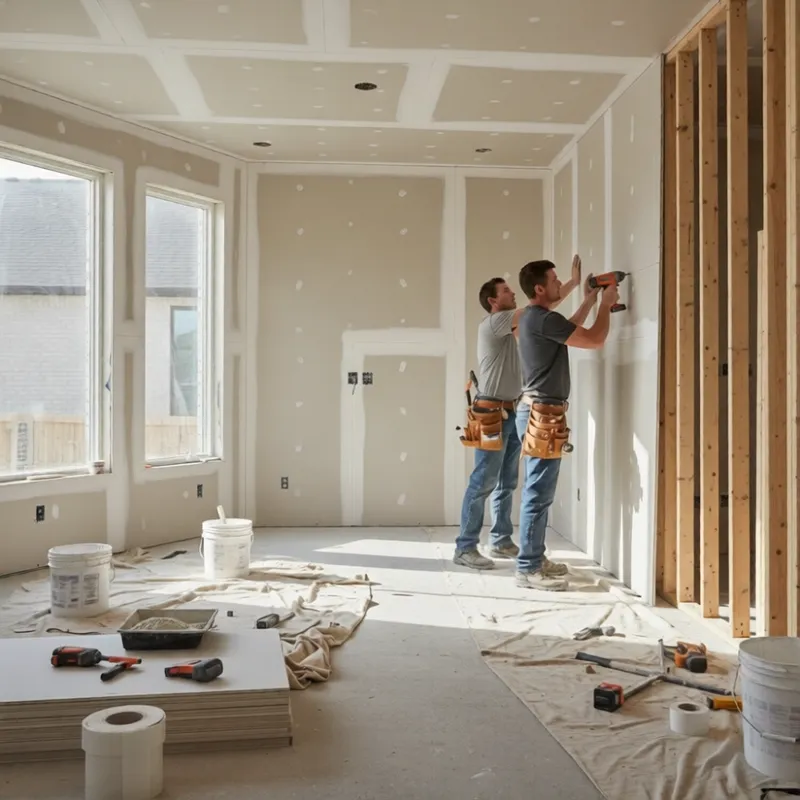
Fire-Rated Drywall Installed by Code Experts
Fire-rated drywall only protects when every component of the assembly is installed correctly. We understand the tested assembly specifications published by gypsum manufacturers and referenced by the International Building Code. That means we know the exact screw spacing, the required number of layers, and the approved joint compounds for each rated configuration. We do not guess at fire-rated details. We reference UL assembly numbers and follow them precisely.
Joint treatment in fire-rated walls is not the same as standard finishing. Gaps, missed fasteners, and unsealed penetrations around electrical boxes, HVAC ducts, and plumbing pipes void the fire rating. We apply fire-rated caulk at every penetration, use approved putty pads behind electrical boxes, and tape every joint with the same discipline required by the rated assembly. When the inspector arrives, our work is ready.
We carry full liability insurance and are licensed for drywall contracting in North Carolina. When your project requires fire-rated work that must pass inspection without callbacks, we deliver.
Fire-Rated Drywall Installation Process
Code Review and Requirements
We start by reviewing building plans and applicable code requirements to identify every location that needs fire-rated drywall. This includes attached garage walls and ceilings, furnace and mechanical room enclosures, stairwell walls, demising walls between dwelling units, and any area the building official has flagged. We confirm the required fire resistance rating for each assembly.
Material Specification
Based on the required ratings, we specify the correct panel type, thickness, and number of layers. A 1-hour garage wall may require a single layer of 5/8-inch Type X. A 2-hour demising wall between townhome units may require two layers of Type X or a single layer of Type C on each side with specific stud specifications. We order materials to match the exact UL or GA assembly number referenced in the plans.
Fire-Rated Installation
Our crews install fire-rated panels using the fastener type, length, and spacing specified by the tested assembly. For multi-layer installations, we stagger seams between layers so no two joints align. Every electrical box receives an approved putty pad or fire-rated box cover. Pipe and duct penetrations are sealed with intumescent caulk or fire-stop collars. No penetration is left unaddressed.
Documentation and Inspection Support
We document the assembly numbers used, the materials installed, and the penetration treatments applied. This documentation supports a smooth inspection process. If questions arise during the building inspection, we are available to walk the inspector through the assemblies and provide manufacturer data sheets for every component.