
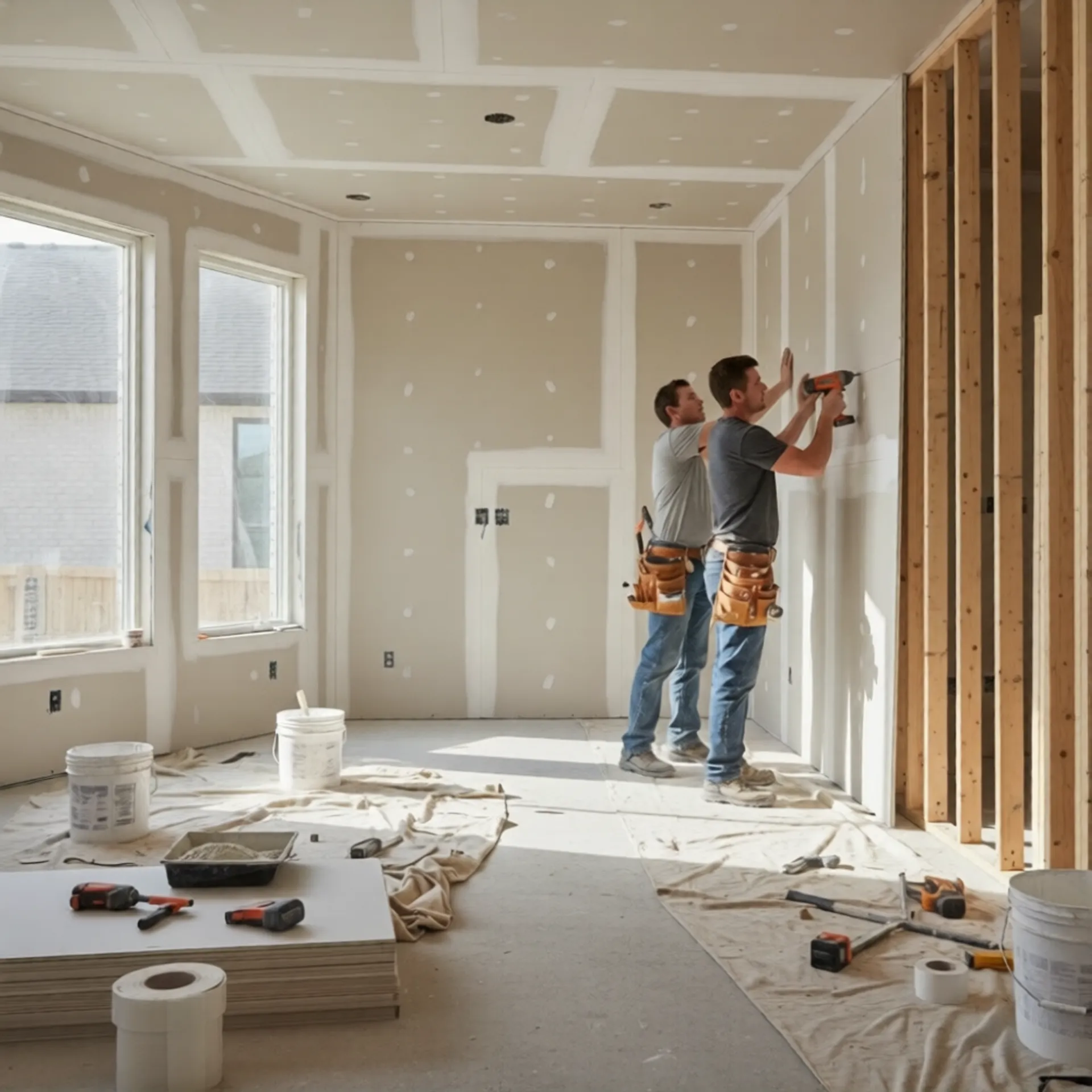
Basement Drywall Installation in Wilmington, NC
Wilmington Elite Drywall provides professional basement drywall installation in Wilmington, NC with years of experience turning unfinished below-grade spaces into comfortable, finished living areas. We understand the unique challenges that come with basement environments, from moisture management and vapor barriers to framing around mechanicals and maintaining access to utility panels.
Whether you are finishing your basement for the first time or renovating an existing space, our crews deliver drywall work that stands up to the demands of below-grade conditions and looks great for years to come.
Get a Free EstimateBasement Finishing That Creates Livable Space
An unfinished basement is wasted square footage. With proper drywall installation, that raw concrete and exposed framing becomes a family room, home office, guest suite, or recreation space. The key is doing the job right from the start. Below-grade spaces demand moisture-resistant materials, correct insulation placement, and careful planning around plumbing, HVAC, and electrical systems that run through the ceiling and walls. We handle every detail so your finished basement performs like any other room in your home.
Full Basement Drywall Installation
We install drywall throughout entire basements, covering walls and ceilings to create a fully enclosed, finished environment. Our crews frame walls against foundation surfaces with proper spacing for insulation and vapor barriers, then hang, tape, and finish drywall to the same standard as any above-grade room in your home.
Moisture-Resistant Material Selection
Basements face constant moisture exposure from the surrounding soil and foundation walls. We use moisture-resistant drywall, including purple board and green board products rated for high-humidity environments. These panels resist mold growth and moisture absorption far better than standard drywall, protecting your investment long after the project is complete.
Utility Access Planning
Basements house water heaters, furnaces, electrical panels, and plumbing cleanouts that need to remain accessible after finishing. We plan access panels, removable sections, and clearance zones around every utility point so you never have to tear out drywall to reach a shutoff valve, breaker box, or service connection.
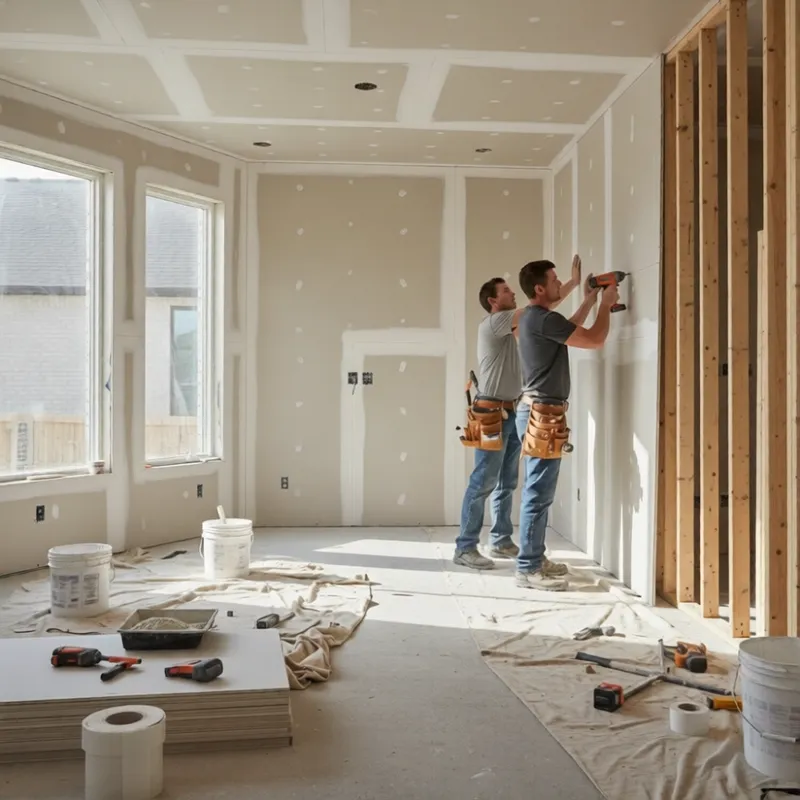
Basement Drywall Expertise You Can Count On
Finishing a basement is not the same as drywalling an above-grade room. Moisture migrates through concrete foundation walls, condensation forms on cold surfaces, and low ceiling heights leave no margin for error in framing and panel placement. Our crews understand how to install proper vapor barriers between the foundation and framing, select the right insulation type for below-grade walls, and frame soffits around ductwork and pipes without sacrificing more headroom than necessary.
We also integrate access panels into the finished design so your HVAC system, plumbing shutoffs, and electrical panel remain reachable without tearing into walls. Every basement project we complete is built to last in a below-grade environment, not just look good on day one.
Basement Drywall Installation Process
Basement Assessment & Moisture Testing
We evaluate the basement for moisture intrusion, check foundation walls for seepage or condensation, and test humidity levels. We inspect existing framing, identify where vapor barriers are needed, and map out all utility locations that require access after finishing. This assessment drives every material and design decision.
Framing & Insulation
We build interior framing against foundation walls with an air gap to prevent moisture transfer. Rigid foam or fiberglass insulation is installed between studs, and a polyethylene vapor barrier is applied where conditions require it. Soffits are framed around ductwork, pipes, and beams to maintain a clean ceiling line while preserving maximum headroom.
Drywall Installation
We hang moisture-resistant drywall on walls and ceilings, using proper screw patterns and staggered joints to prevent cracking. Panels are cut precisely around outlets, windows, utility access points, and mechanical penetrations. Every seam is taped and finished with multiple coats of joint compound for a smooth, uniform surface.
Finishing & Final Inspection
After the final sanding pass, we inspect every joint, corner, and fastener under work lights to catch imperfections. We verify that all access panels operate correctly and that utility clearances meet code requirements. The finished surfaces are smooth, flat, and fully prepared for primer and paint.
Basement Drywall FAQs
What type of drywall should I use in a basement?
How do you handle access to utilities in the basement?
Can you finish a basement with low ceilings?
How long does basement drywall installation take?
Do I need a permit to finish my basement?
Ready to Finish Your Basement?
Get a free, no-obligation estimate for basement drywall installation in Wilmington, NC. We will assess your space, discuss material options, and provide honest pricing.